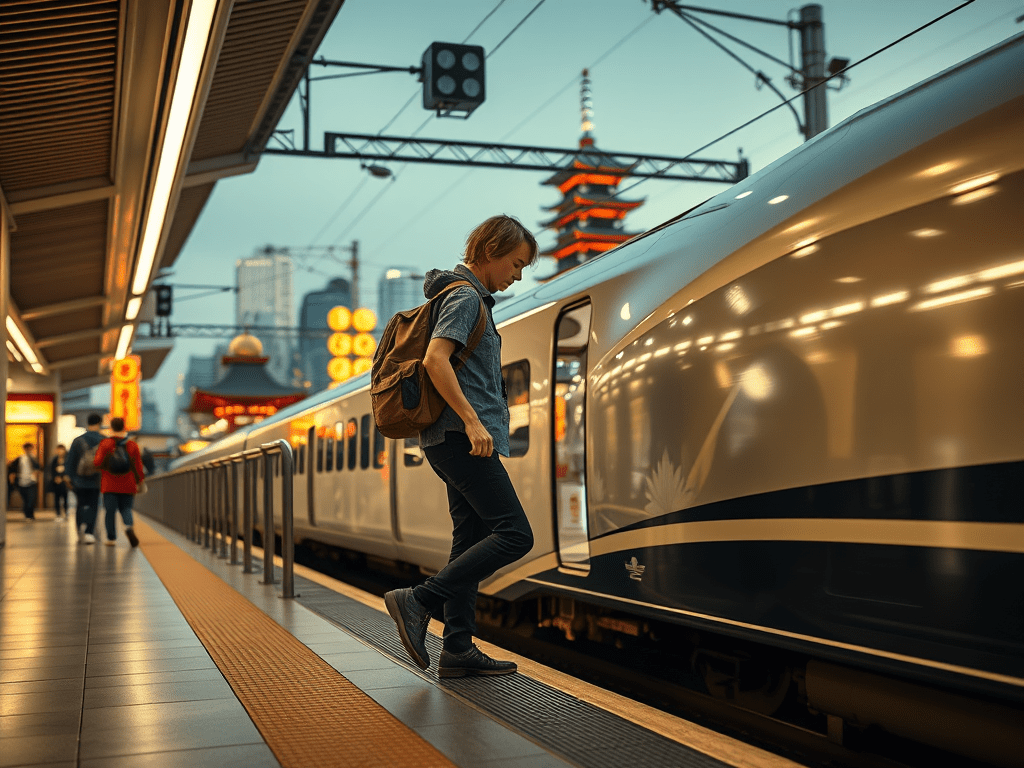
My first ever steps in Japan started in Fukuoka. Stepping off of that plane, I had no idea what to expect. The first big step I needed to do travelling from Fukuoka to Hiroshima. So on a random Thursday at 17:30pm in the evening, on the other side of the world I made my way to the national railway. Going back to the tired, hungry and in need of a shower… One of the unspoken realities of travel—delays, long waits, and feeling a bit grimy along the way.
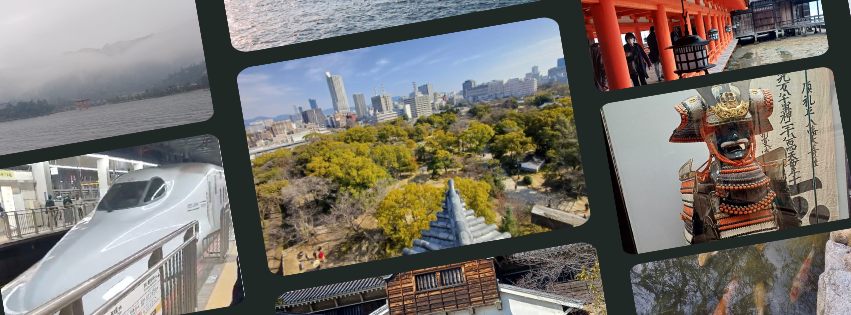
JR Rail and Public Transport in Japan
The JR is everything you expect it to be—fast, smooth, and quiet. When I first stepped onto this innovative train, I couldn’t help but compare it to transport in the UK and thought… what are we doing wrong? Forget the grimy, cramped tube lines of London—this train is the future!
Arriving in Hiroshima, however, wasn’t as straightforward. As soon as I stepped off the train and left the station, I had no idea where to go. My Japanese was virtually non-existent, aside from the basic hello, thank you and please. Thankfully everyone in Japan is incredibly polite and I was kindly directed by a train conductor whose English was far better than I Japanese could ever be!
If you’re wondering what type of JR pass to get or where to buy it, it really depends on your trip. I purchased a one-week pass to get me from Fukuoka to Hiroshima and onwards. For some routes, I couldn’t justify spending nearly 500 pounds on a 3 week pass. There are also local tickets available for specific routes—like Osaka to Kyoto or Nagoya to Tokyo. I’d recommend either buying tickets at local stations or checking specific routes on Klook. Klook was my lifesaver for specific tickets that I needed on my trip that saved myself and others money whilst still getting from place to place.
Another important tip for getting around Japan is navigating public transport within cities and towns. There are a huge range of cards that you as a tourist can purchase in Japan. Fustratingly, it can be confusing on what to get from Pasmo to Suit to ICOCA. I was lucky enough to easily purchase an ICOCA card in Hiroshima, which I then topped up whenever I needed to travel on public transport across Japan.
The stations can be overwhelming, especially in busy places like Tokyo, but if you follow the signs or ask someone, you’ll quickly find a train office where you can purchase one of these cards. You might wonder what the difference is between them—honestly, I’m not sure! They can all be bought in different locations, but they essentially work the same way.I’d highly recommend getting one of these handy cards, whether in physical form or on your phone, as taxis can be very expensive. They make travel much easier and more affordable.
The buses weren’t nearly as confusing as my anxious mind had imagined. After what must’ve been 8 PM or later, I hopped on a short bus ride with my oversized suitcase and travel bag. I then found myself walking about half an hour to my accommodation. My accommodation was a wonderful little apartment that I found on Airbnb. The hosts were super and it had to be one of the comfiest beds I’ve ever stayed in. After a long sluggish day, I finally found myself dumping my bags and on the hunt for dinner.
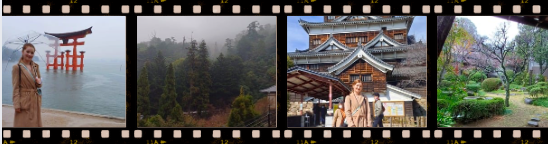
Hiroshima
7/11s, Family marts and Lawson
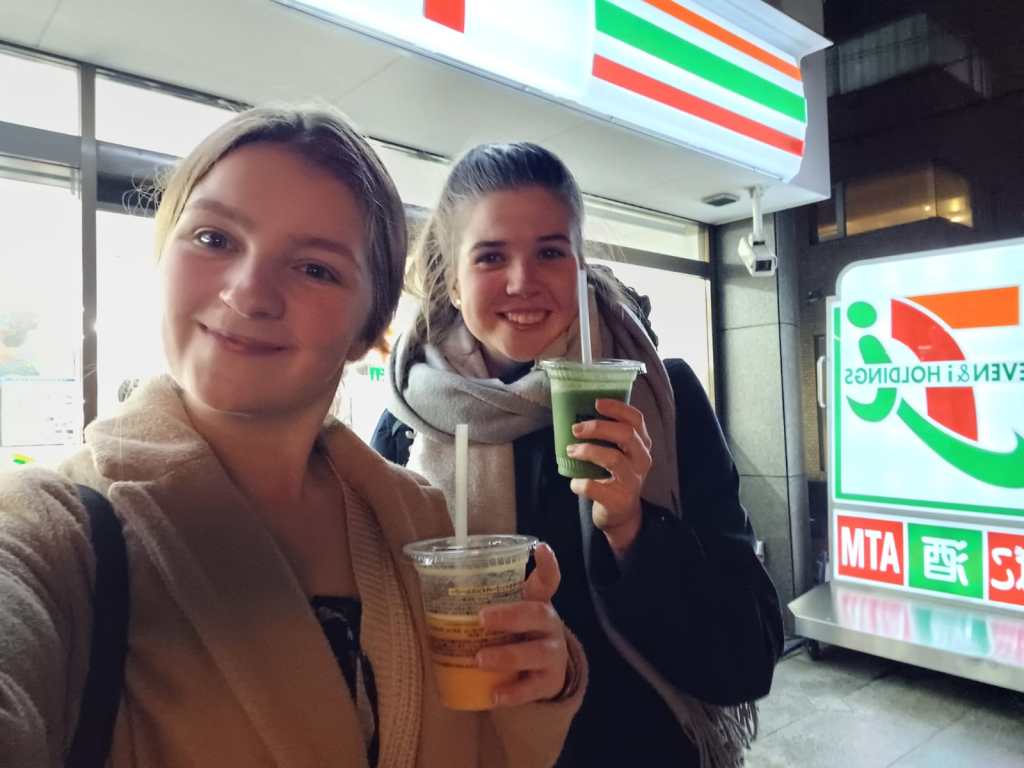
For anyone who’s researched, visited, or lived in Asia, you’ll know about the iconic 7/11 stores. Europe really needs to catch up, because these convenience stores are not only stocked with some of the wackiest and most unique snacks you can try, but they’re also a lifesaver for commuters, the lazy, or anyone feeling hungover. The smoothies, in particular, are something I miss every day since returning to the UK. And for a small convenience store, the coffee isn’t half bad either. Japan specifically has three famous ones, &/11, Family mart and Lawson. Personally my favourite is the 7/11 but they all essentially provide the same products and services.
My top picks? Any sandwich, onigiri, and whatever the most unusual snack you can find is. Pair it with a smoothie of your choice—just select the flavour, choose your cup size, and let the machine do the rest. For anyone rushing to work or returning home after a long day, these little creations are a game-changer! The same goes for the coffee machines, and the payment options are super convenient. Without giving too much away, experiencing a 7/11 should definitely be in your top 10 things to do in Japan… as strange as that might sound!
Walking into that 7/11, I felt like a fish out of water—utterly clueless. Don’t get me wrong, I’m usually a social butterfly and love trying new things, but I was too embarrassed to figure out how to use the machines… until a new friend I made a couple of days later showed me the ropes. I know I should have sucked it up, as 15 minutes of feeling silly probably wouldn’t have killed me, but hey, can’t blame me for shying away! (Or maybe you can, but that’s beside the point…).
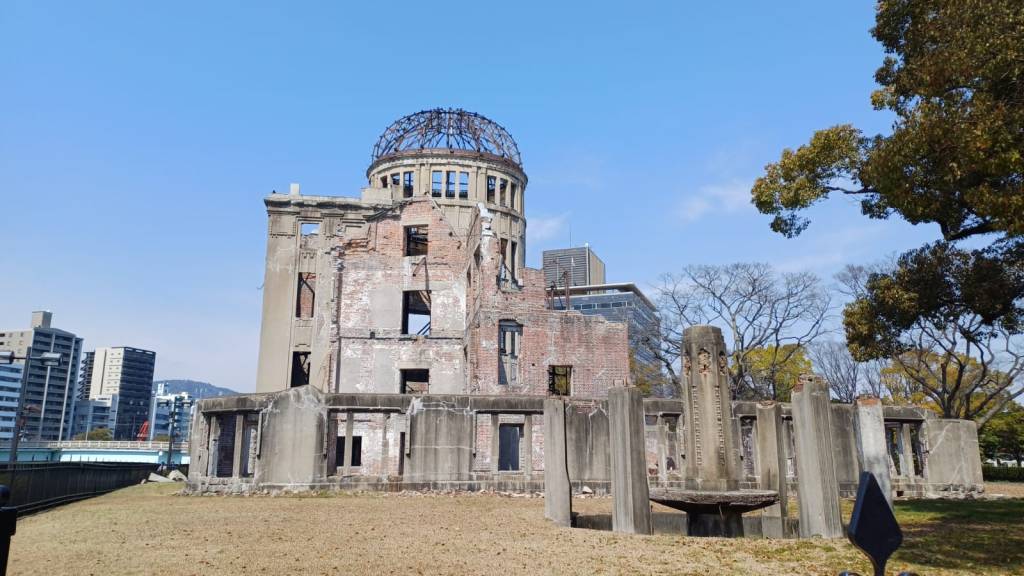
Atomic Bomb Dome
There I was in Hiroshima, a place with a profound history, known for being the site of the first atomic bomb in 1945. Today, It’s vibrancy offers an embodiment of resilience, peace, and hope for the future. My first official day in Hiroshima, was a slightly cold, but clear day where I visited the A-bomb dome. It was the site of the first atomic bombing, an event that forever changed the world. Today, the city has transformed into a symbol of peace, with landmarks like the Peace Memorial Park and the A-Bomb Dome serving as poignant reminders of the tragedy.There was a certain energy and presence to this historic site that felt deeply moving..
As I wandered around the area, I noticed locals with sheets of paper spread out on the ground, filled with text and images. These papers were contributions from the families of those who had suffered in the bombings. Many survivors of the atomic blast, known as “hibakusha,” still share their powerful, personal stories with visitors, offering a firsthand account of the city’s tragic past. Their stories are incredibly moving, often full of resilience and a deep desire for peace. It was both touching and awe-inspiring to hear the accounts from the victims’ loved ones. They aren’t paid or prompted to share these stories—it’s simply their way of passing on the truth to people from all over the world. I’d highly recommend taking some time to sit, listen, or read about these personal stories while in Hiroshima..
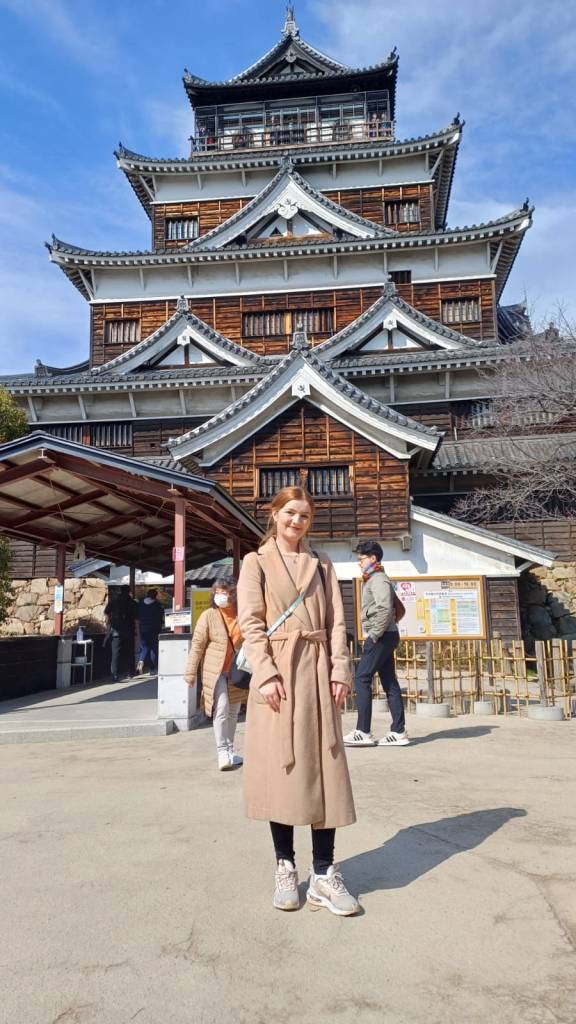
After visiting the dome I found myself wandering around the Peace park and eventually towards, Hiroshima Castle. But in the 16th century by lord More Terumoto, it was tragically destroyed by the atomic bombing in 1945. The main keep has been restored in 1958 and is home to a Museum. It is nicknamed Carp Castle due to a population of wild carp living in the parks moat! It’s a stunning example of traditional Japanese architecture,, combined with the modern city surrounding it. I definitely recommend visiting this historic landmark whilst you explore the parks grounds
Food
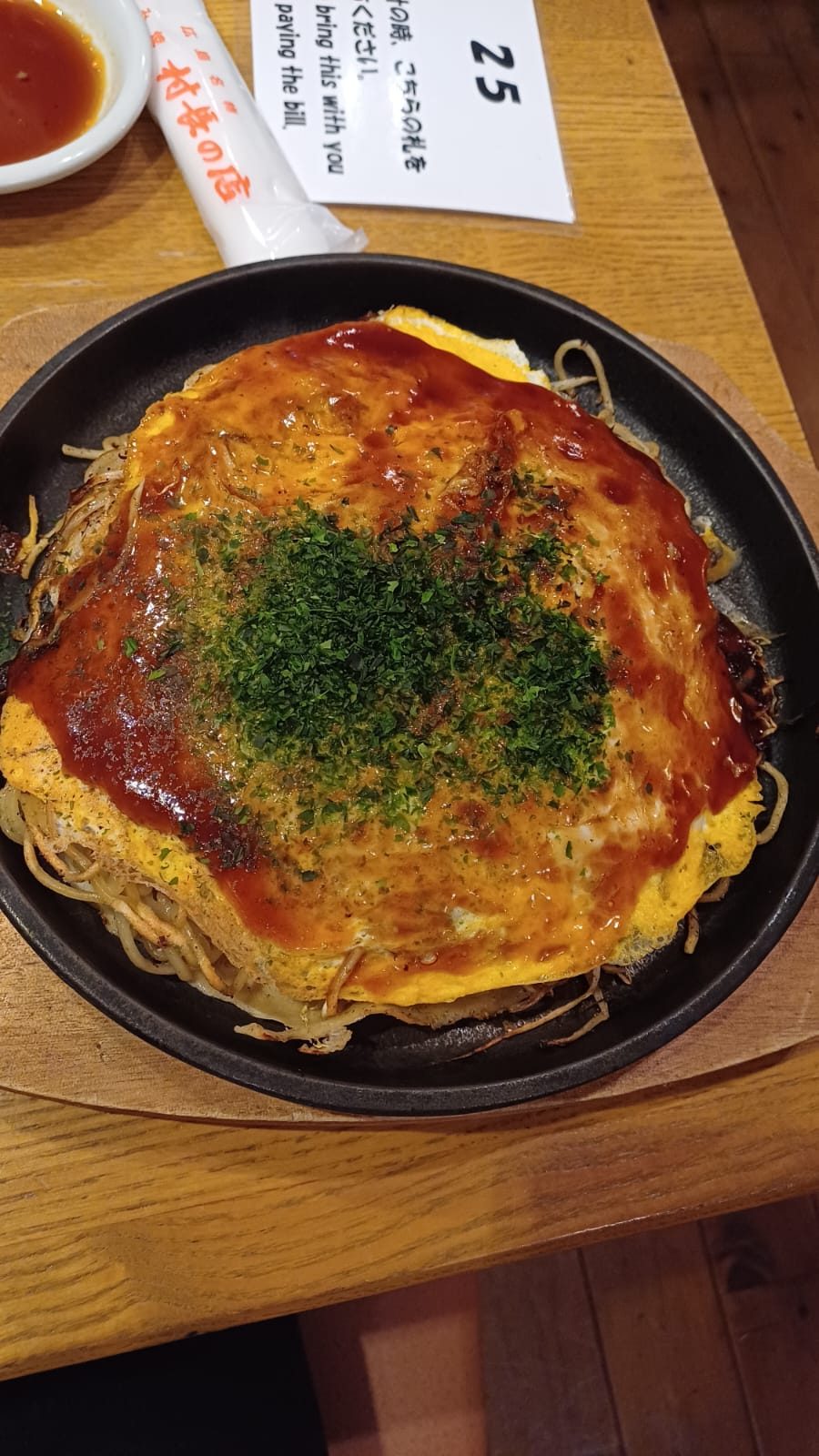
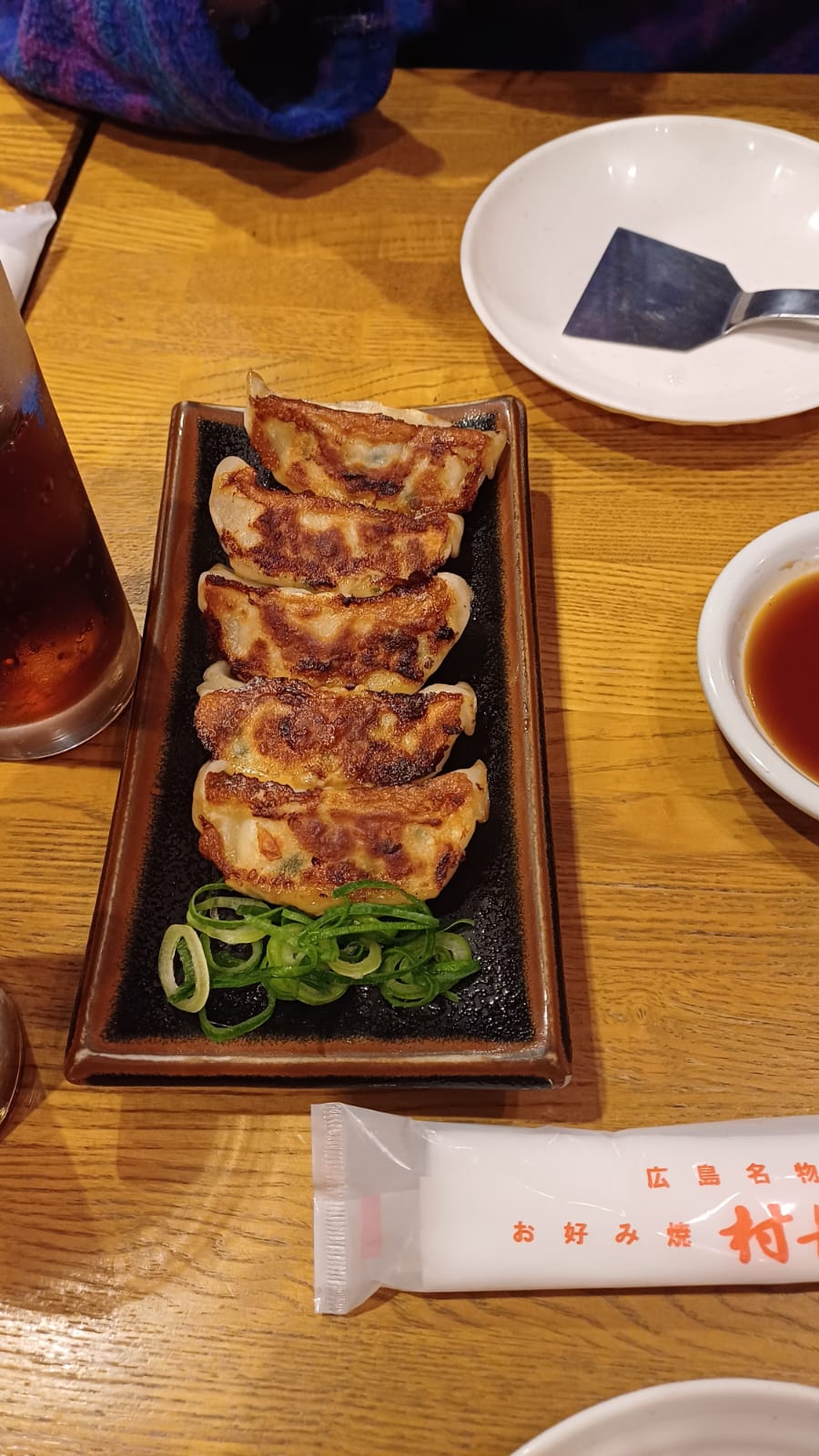
In the evening, I decided to take a stroll through the city towards the famous Okonomimura. If you’re visiting Hiroshima, there’s one thing you absolutely must try—Okonomiyaki. Known as the city’s soul food, this flavorful dish is a kind of savoury pancake layered with cabbage, noodles, and your choice of pork, shrimp, or other fillings. There’s also a vegetarian option, and you can customise it with a variety of ingredients. Topped with a tangy, thick sauce and a sprinkle of sesame seeds, it’s a dish you won’t want to miss. From sweet and savoury to rich and satisfying, every bite is delicious. Okonomimura, as I gathered, is a collection of izakayas serving this tasty specialty, giving you plenty of options to choose from. Being a classic, it’s definitely not one to skip. Above are a couple of images of my Okonomiyaki and Gyoza, which I happily devoured.
Miyajima
The next big tourist attraction in Hiroshima is, of course, the famous Miyajima. I booked a half-day walking tour, but unfortunately, I chose the worst outfit for the weather—white trousers and pumps in torrential rain and on muddy paths. Not exactly ideal. My feet were completely soaked, and to make matters worse, I didn’t have an umbrella (which I later bought, of course).Classic Sasha mistake, that one. Note to self: never again!
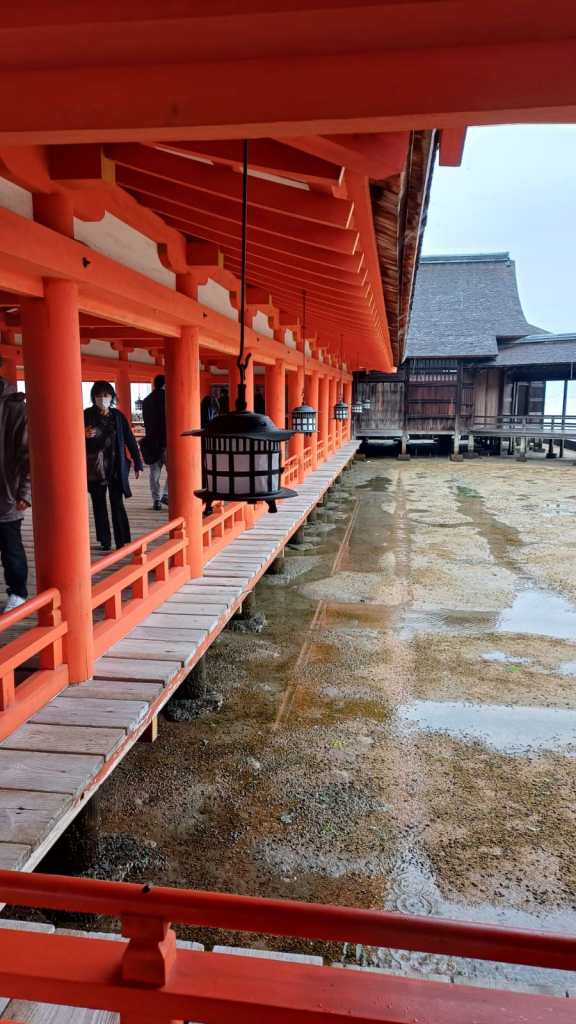
But I met up with my small group of 5 and off we went on a little ferry to the island of Miyajima. Just off the coast of Hiroshima we strolled along the coast to the otorii gate and then onto the itsukushima shrine. Construction of the shrine began during the Heian Period (794-1192) and to this day, still stands strong against the ebb and flow of the tides. The tori gate appears to ‘float’ in high tides and considered one of the most photographed places in Japan, being a UNESCO world heritage site. When the tide is low, you can actually go up to the gate and be a classic tourist and take photos with it. But after my drenched feet and the prospect of trudging through sand while dodging a massive queue of tourists, our group decided to pass on that experience.
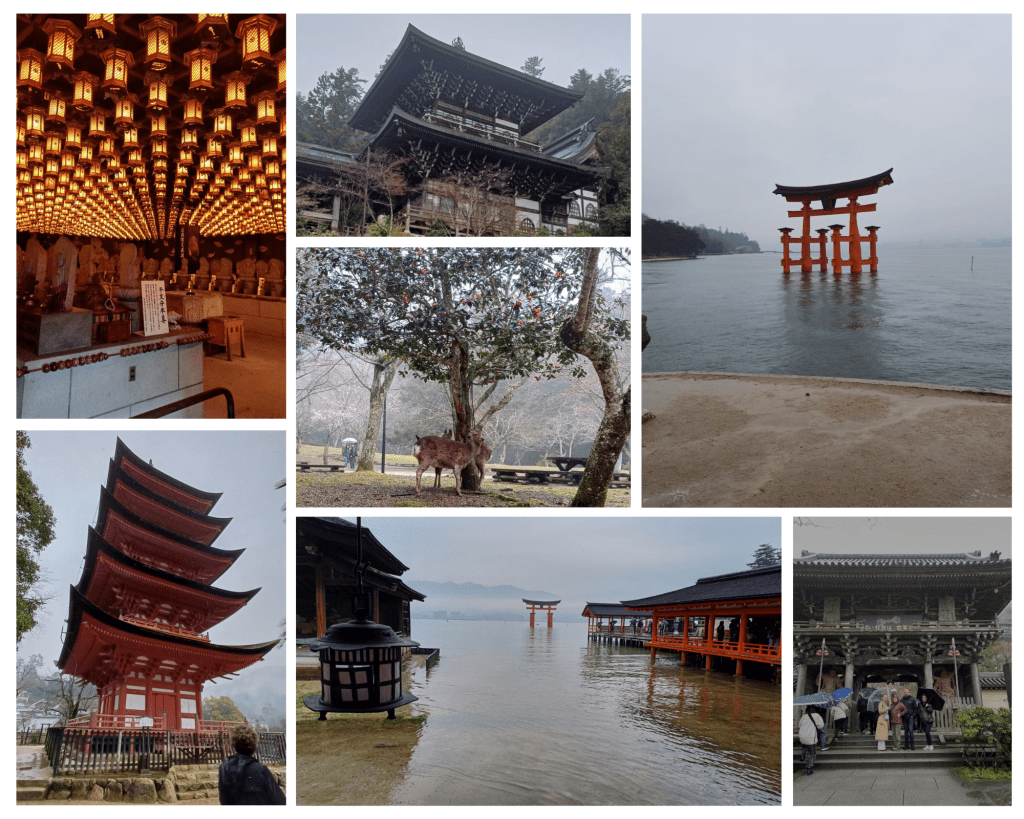
Instead, we wandered around the shrine and stumbled upon a beautiful wedding photoshoot, which we all couldn’t help but stop and stare at. After gawking at the happy couple (in awe of how stunning they looked), we moved on to a museum to learn about Miyajima’s rich culture. After a quick lunch, we ventured further to explore more of the islands temples and architecture, such as the Daisho-in Temple. One of the most important Buddhist temples on Miyajima, this landscape offers beautiful gardens and statues to admire. Despite being soaked and cold, there was something truly serene about exploring the peaceful grounds in the rain.
After heading down the mountain side and back onto the ferry, I was ready for a hot meal and a cosy bed!
Shukkeien Garden, new friends and my first cherry blossom!
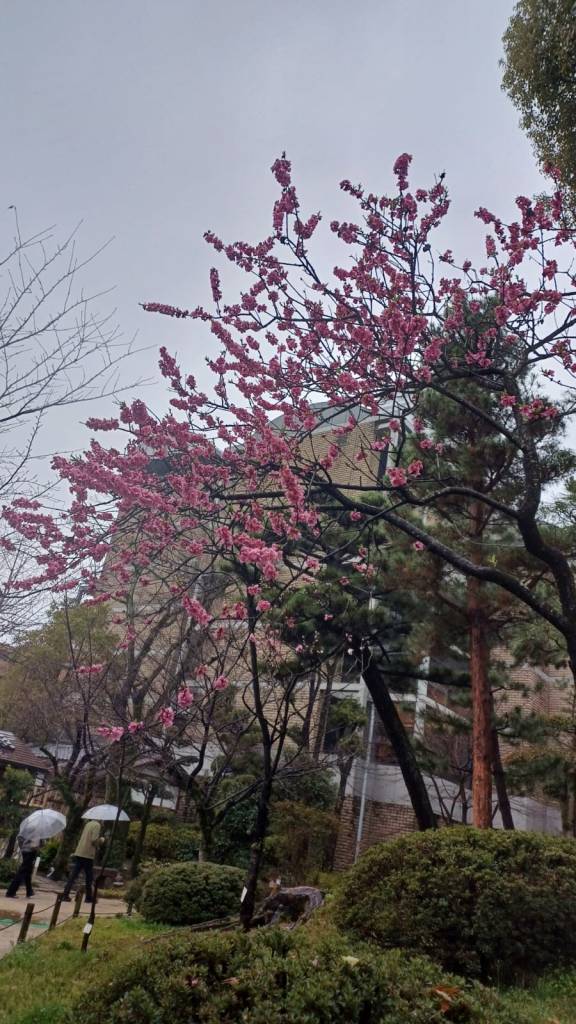
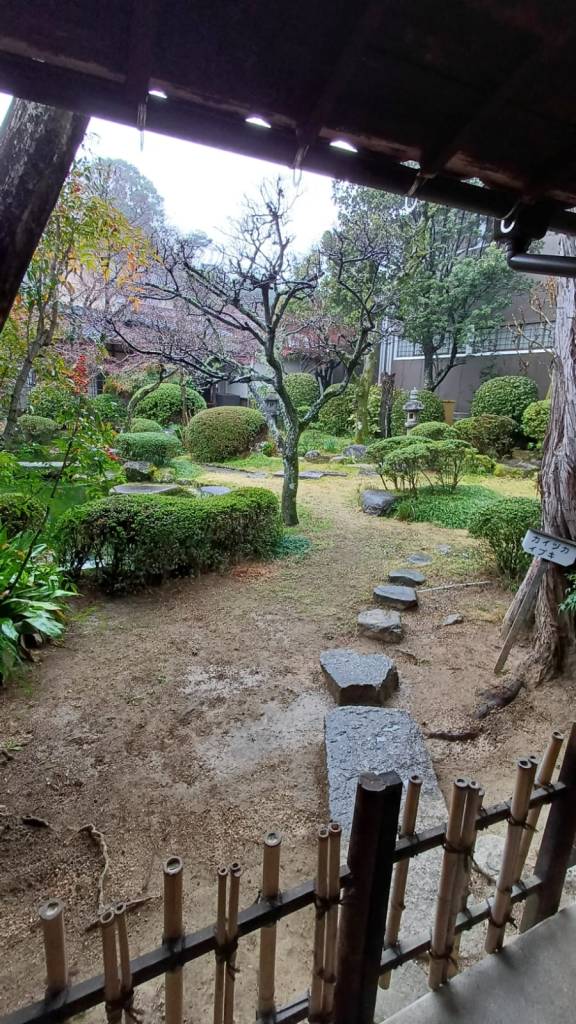
My final days in Hiroshima were actually pretty relaxing. I wondered around the city, merely exploring and also in gardens like Shukkeien. After a couple of busy days, I was eager to immerse myself in the tranquility of a traditional Japanese garden, and Shukkeien was the perfect spot for that. The garden offers a mixture of lush plants, teahouses and of course Sakura! Naturally, I’d timed my visit to coincide with cherry blossom season, but little did I know, my efforts to catch the sakura in full bloom were mostly in vain as I traveled north to south across the country.. But I’ll take anything I can get, and I could see that the sakura were starting to bloom (or so I thought).
As I wandered through the greenery and passed under the torii gates, I eventually found myself heading back into the city, looking for a quick bite on my last evening. After enjoying the delicious okonomiyaki on my second night, I decided to end my trip with another classic dish.
While waiting in line to enter one of the izakayas, I noticed a girl about my age ahead of me. We exchanged a smile, both of us too shy to make the first move. But eventually, she broke the ice and said hello, and from there, we struck up a conversation. What we talked about, I couldn’t tell you—it was the usual small talk. That’s one thing about solo traveling, the anxiety of eating alone in a restaurant. Ironically in Japan its very common for the normal commuter to stop at a local izakaya on their way home and grab a quick bite to eat.
After stuffing our faces and swapping stories, we decided to explore the city a little longer before exchanging social media details and inevitably parting ways—probably never to see each other again. Okay, maybe that’s a bit dramatic, but it’s one of the lessons I’ve learned from travelling. While you meet amazing people and form connections in the moment, you also have to accept that you might never cross paths again. I’d love to meet up with everyone I’ve met around the world at least once a year, but life tends to get in the way—work, studying, and the busyness of it all. People go their separate ways, but I’m always grateful for the opportunity to meet extraordinary individuals and hear their stories.
Travelling can be strange like that. One minute, you’re oversharing, spilling your deepest secrets to people you’ve known for all of two weeks. Then, just like that, you’re parting ways like they’re just another acquaintance or stranger. The social boundaries while travelling are pretty much non-existent—unless, of course, you’re not much of a sharer. But honestly, travelling feels like a whole different world, like a bubble that exists outside of regular reality, only to burst the moment you’re back home.
But I digress… back to the wonderful world of Japan.
Goodbye Hiroshima
After a slightly longwinded start to my Japan travels, I made my way back to the train station and hopped on the shinkansen to my next destination. My first impression of Hiroshima was that it’s an incredibly clean, quieter part of Japan—far less touristy than some of the bigger cities. That said, it can be a bit tricky to communicate with locals if you’re not fluent in Japanese, but Hiroshima certainly has an important and powerful story to share with visitors. I’d recommend spending no more than 2-3 days here, though if you feel differently, take as much time as you need to soak it all in!
Thank you for reading my post—I hope you enjoyed.
Until my next blog of intrepid tales on my trails…!
 Intrepid Trails & Tales⛰️
Leave a comment