
The glories of public transport

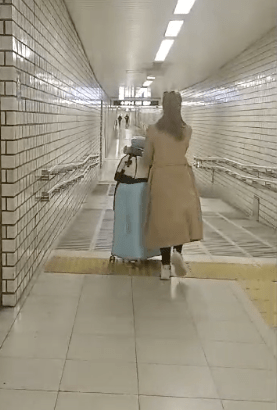
Now I haven’t yet mentioned the reality of lugging large suitcases across a country. Of course, before I even started travelling, I purchased an over-sized suitcase to transport and carry all of the future purchases I bought along the way. However, dragging around a massive suitcase and travel bag on public transport is far from glamorous or elegant. Admittedly, it’s my own fault – it’s awkward, heavy, and almost the same size as me! Manoeuvring them up and down lifts or rolling them through town while simultaneously looking at maps whilst avoiding people is a task in itself.
But we chose this because simply – we didn’t want to pay for an over-priced cab! – so travelling through the undergrounds of Japan and wheeling our luggage round for what felt like ages, we were on the Shinkansen to…. the one, the only KYOTO!!
Hello Kyoto!
Of course – we couldn’t travel to Japan, without visiting the famous Kyoto. Situated in the Kansai region, Kyoto is brimming with culture, architecture, and history to explore. From ancient temples to traditional districts, and from the famous sights of Geisha to the serene beauty of its gardens, Kyoto truly is one of Japan’s many treasures.
After the strenuous travel once more from one city to another, we were excited to look out the window and be welcomed into the city of Kyoto. We didn’t do too much on our first evening, as most of the day had been taken up with travel, but the following morning, we woke up early and set off to explore the cities famous site of Fushimi Inari Taisha.
Fushimi Inari Taisha
If you know anything about Kyoto, you’ve likely seen photos/clips or reviews of this famous site.The famous torii gates leading up to Mount Inari are one of Japan’s most recognisable landmarks and a popular destination for pilgrimages.
We had risen early on purpose to avoid the crowds, as we’d read that the earlier you arrive, the quieter it tends to be. But when we hopped off the train that took us there, we found ourselves a bit uncertain about where to go next. I suppose following the other tourists was a start!
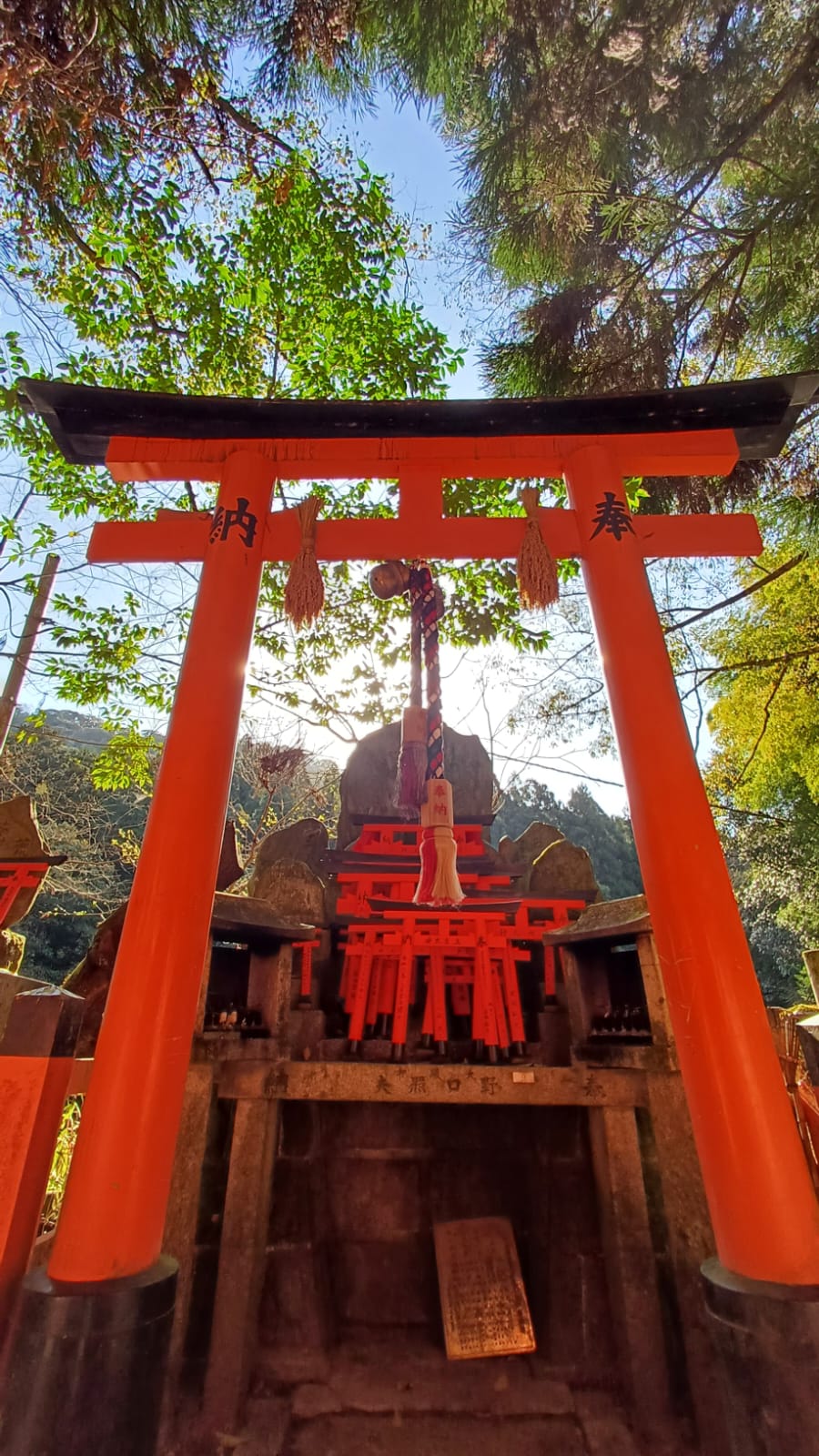
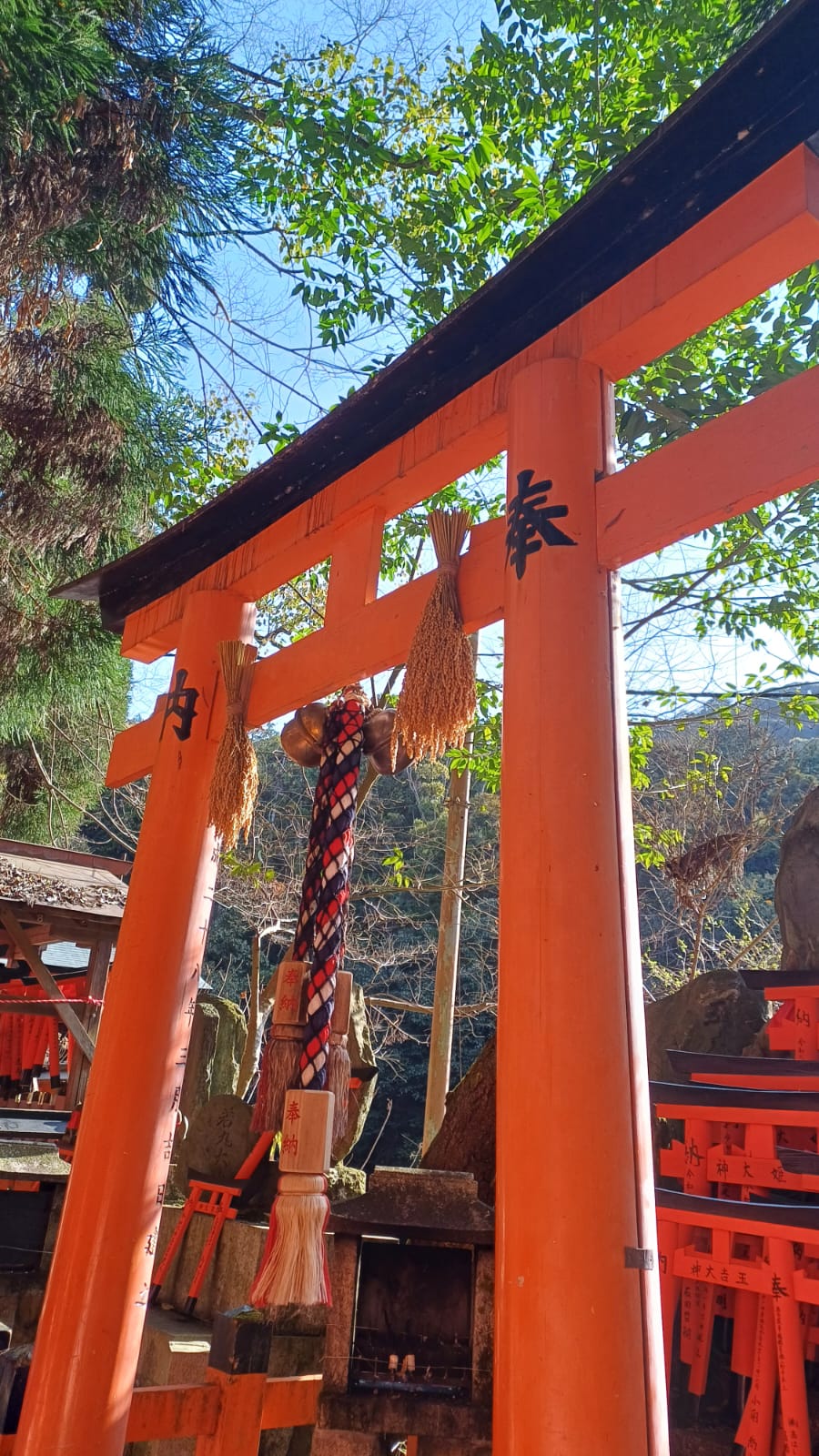
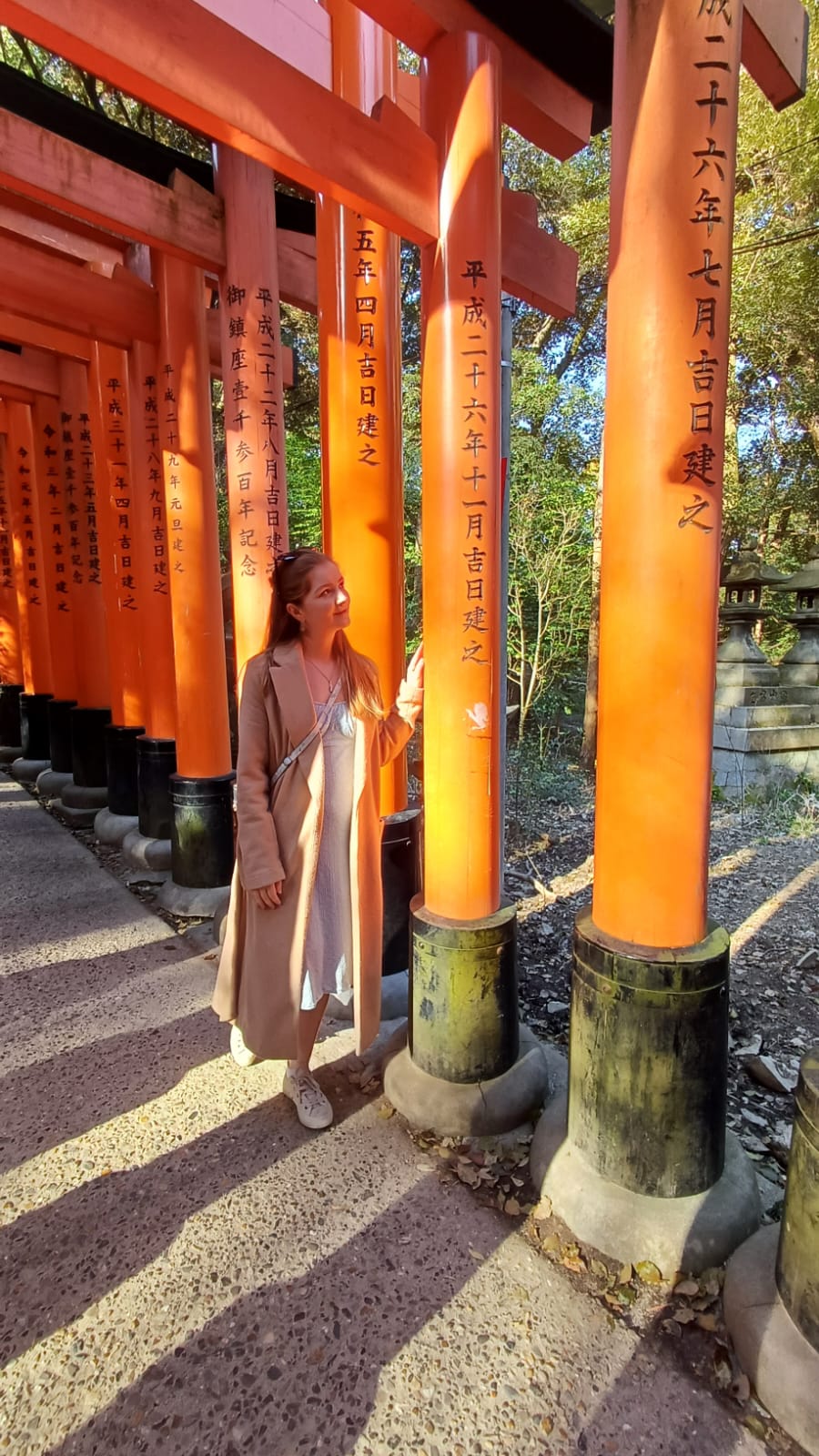
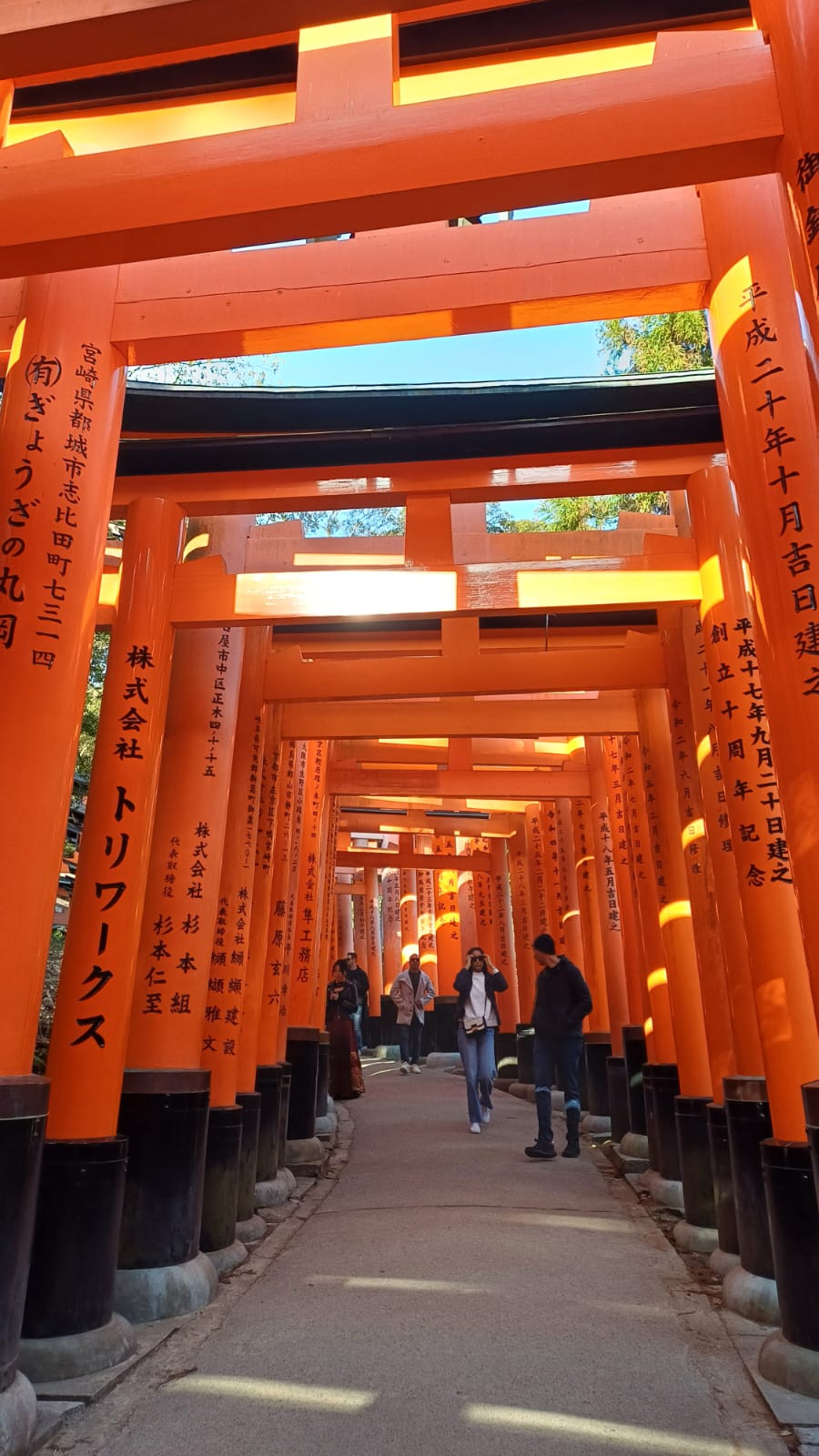
We started at the main shrine’s Romaji gate, and shortly after, we walked through the torii gate tunnel that leads up the mountain. Now, to be honest, yes, this is a famous Instagram or TikTok spot, but as soon as you arrive, you’re confronted with a line of tourists all waiting for their turn to take the classic photos or videos of walking through the gates. It’s a bit of a spectacle and personally, something I don’t endorse. There are plenty of opportunities to take photos and videos without having to queue, but I guess each to their own. I just think it is a waste of time, waiting to take the same picture thousands of people have done before you – not to mention, you can probably find something similar further up the trail. Instead of wasting your precious time in a queue for that one shot, spend your time with actually exploring the site! (mini rant over).
. After doing a bit of research, we learned that this shrine is dedicated to Inari, the Shinto god of rice, agriculture, and prosperity. On the back of each gate, you’ll find inscriptions in Japanese, displaying the names of the donors who contributed to the shrine. There are several routes that you can take, each with varying in length and difficulty. We followed the path of the torii gates to fully immerse ourselves in the site. As you’re walking through, you find yourself mesmerised by how the sun’s rays shine through the gates and dance off of them across the trees. There are several complexes that have Komainu – sub-shrines, where you can see many statues of foxes. They are believed to be the messengers of Inari and typically seen as holding a set of keys in their mouths; symbolic of a key to rice granaries.
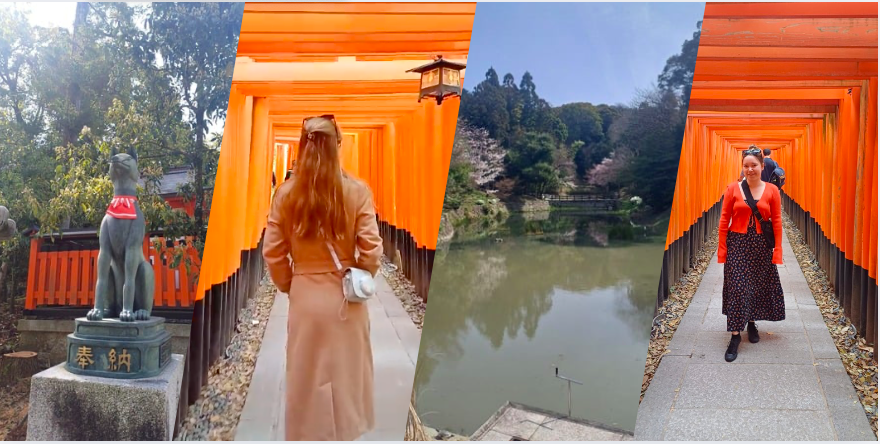
HOWEVER – and I can’t stress this enough, it can be quite challenging since you’re essentially climbing a mountain. – the amount of stairs…. WHEW it’s tough. As you can probably tell, I’m not exactly an avid mountaineer, but we conquered the hills and stairs and made it to a decent height. We reached the Yotsutsuji intersection, to take photos and rest. From here, you can enjoy a panoramic view of the city, and it’s definitely picturesque. Honestly, we were proud of ourselves and managed to snap some great shots and videos without too many people in the frame.
We spent the better part of a morning at the shrine, but honestly, you could easily spend an entire day hiking, exploring the different routes, or even making it all the way to the summit. One piece of advice I’d offer – as anyone would – is to arrive very early, or explore later in the evening. As we were walking back down, we could see the huge crowds coming up, and it was overwhelming. A good time to visit would be around 8 am at the latest or after 6 pm, especially if you want to enjoy the peace and quiet and avoid having too many people in your photos! Along the way, we picked up a little fox dangle ornament as a memento and made our way back down the winding paths to our next stop.
Once we made it back down the mountain (well, mostly walked), we quickly checked our itinerary, hopped on a bus, and were off to Nijō Castle.
Nijō Castle
Originally constructed in 1603, this palace offers a fascinating glimpse into the lives of elite samurais during Japan’s Edo period. Renowned for its “nightingale floors,” the design was crafted to detect intruders by making a chirping sound when walked upon!
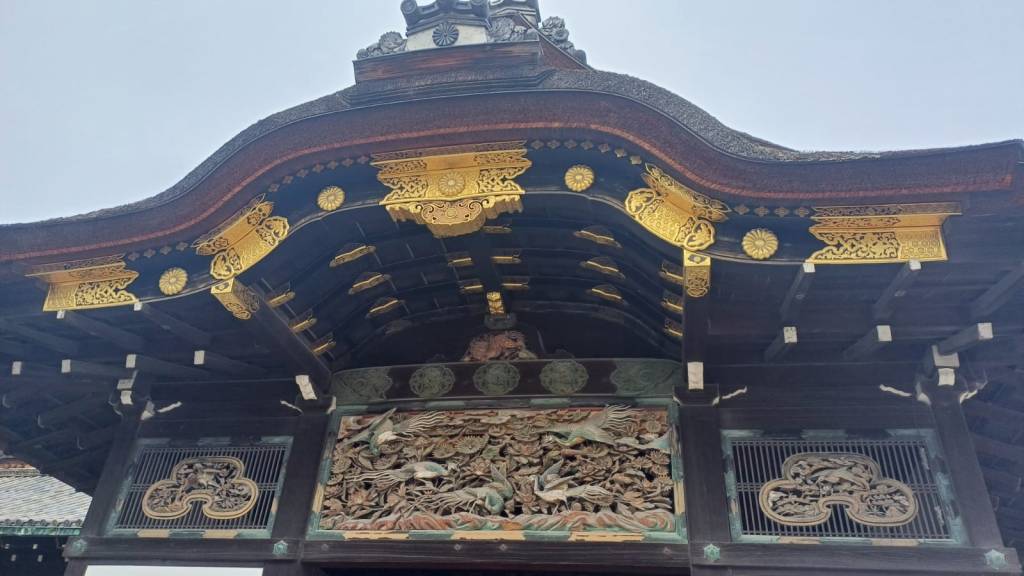
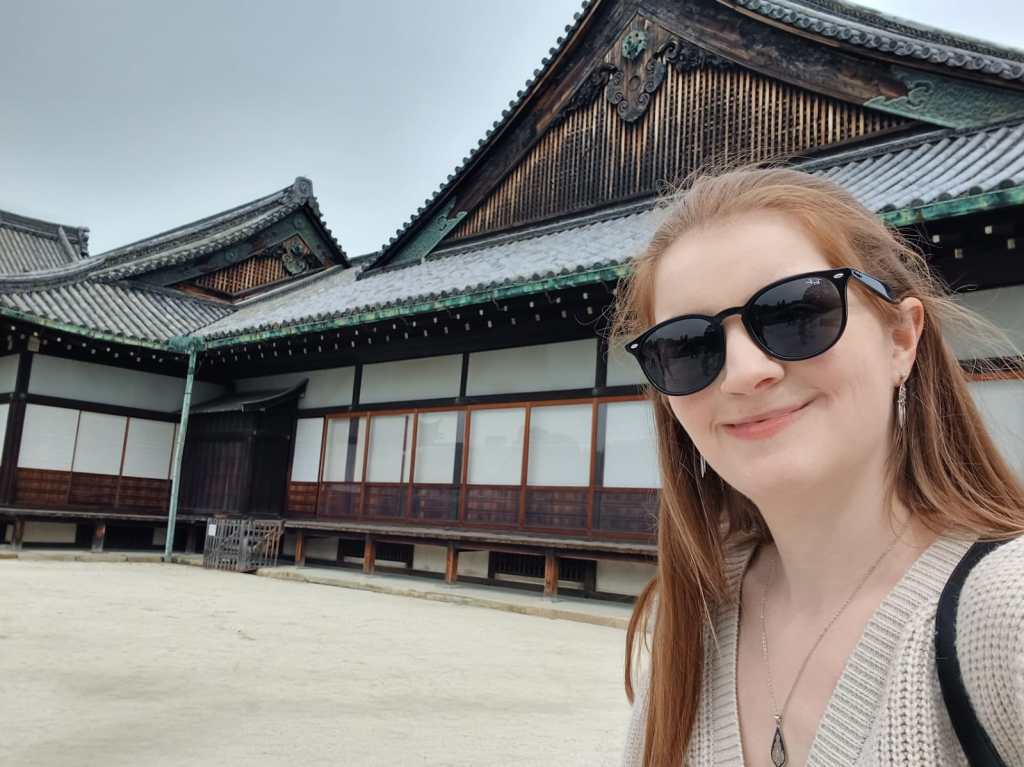
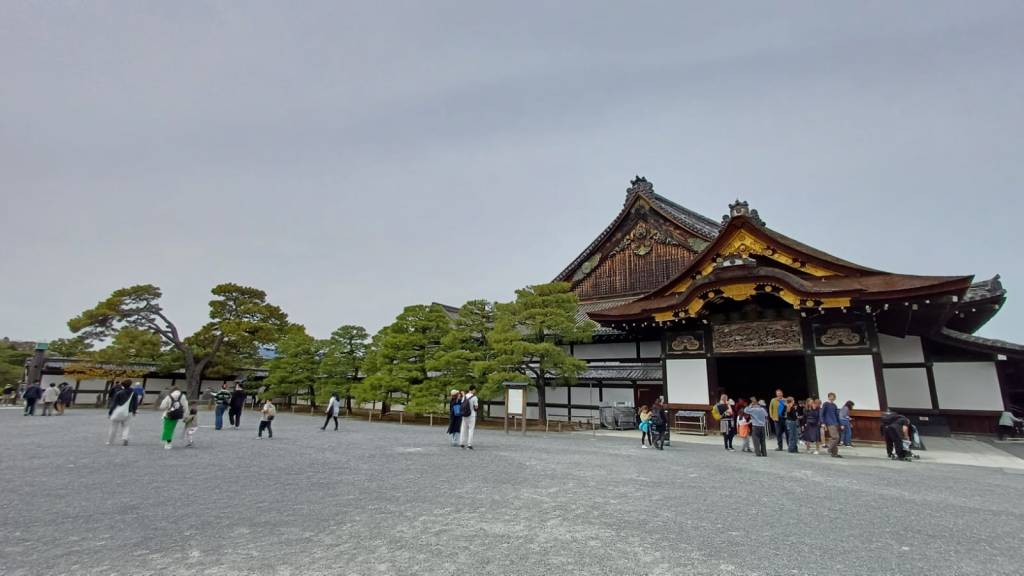
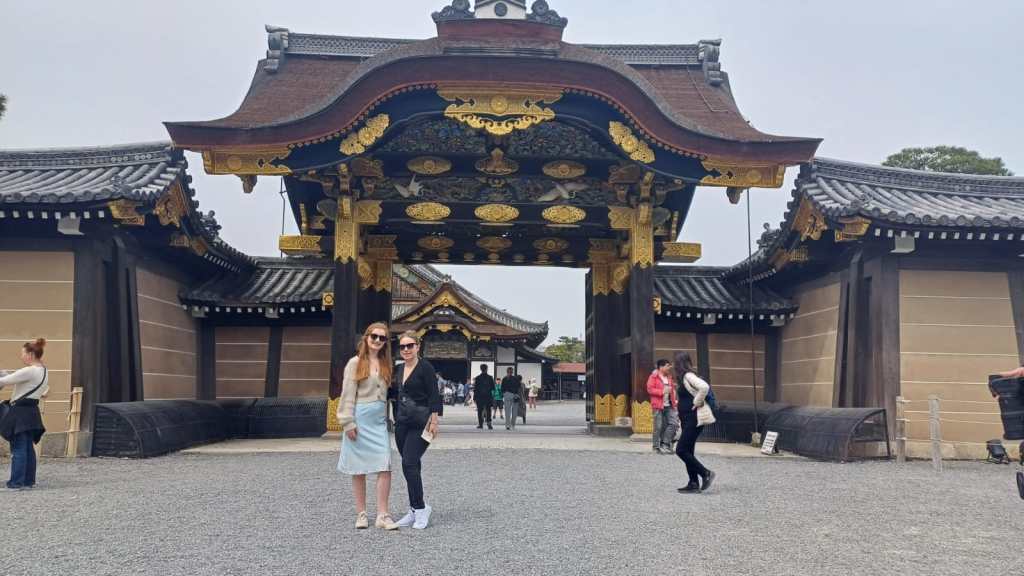
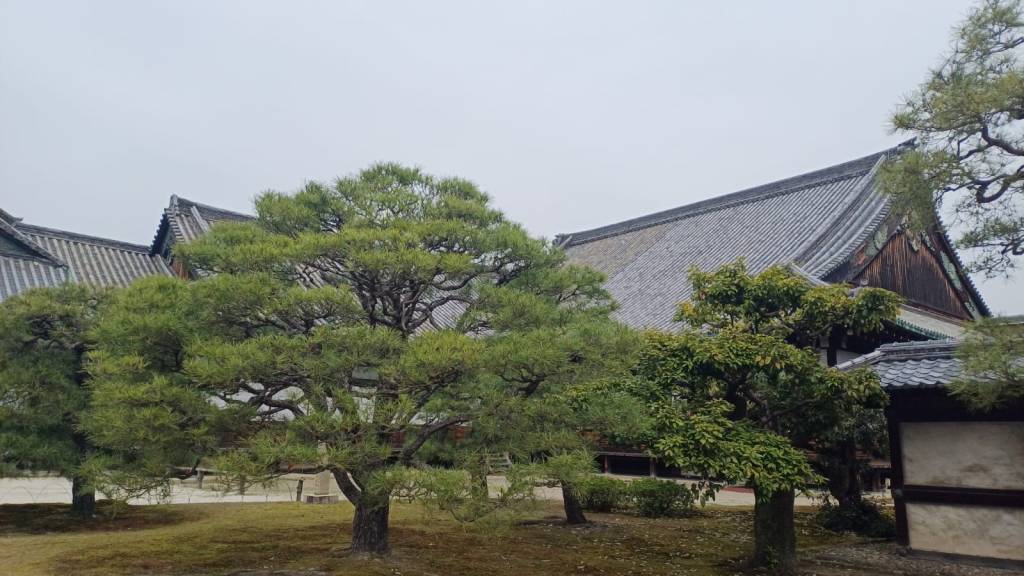
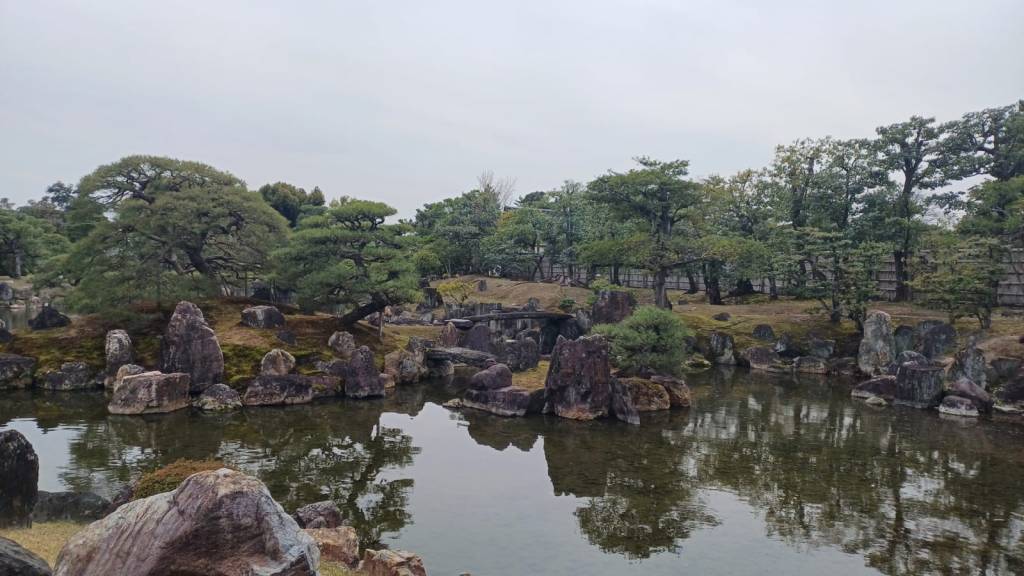
The palace is surrounded by both an inner and outer moat, with gardens to explore. It’s the perfect place to immerse yourself in a piece of Japanese history and culture. Inside you’ll find range of paintings, calligraphy and ceramics, along with exquisite fusuma (sliding doors) and kakajiku (hanging scrolls) to admire. As we strolled through the grounds and came across a small row of stalls selling an array of items – from ceramics to silk, herbs to tea. It was sweet to interact with the local artisans, and purchase some of their beautiful crafts. You could tell they genuinely took pride in their work. Of course, I couldn’t resist picking up a ceramic mug, a silk scarf, and some herbal tea. It felt good to support the local businesses and share a smile with the people.
Our hunt continues
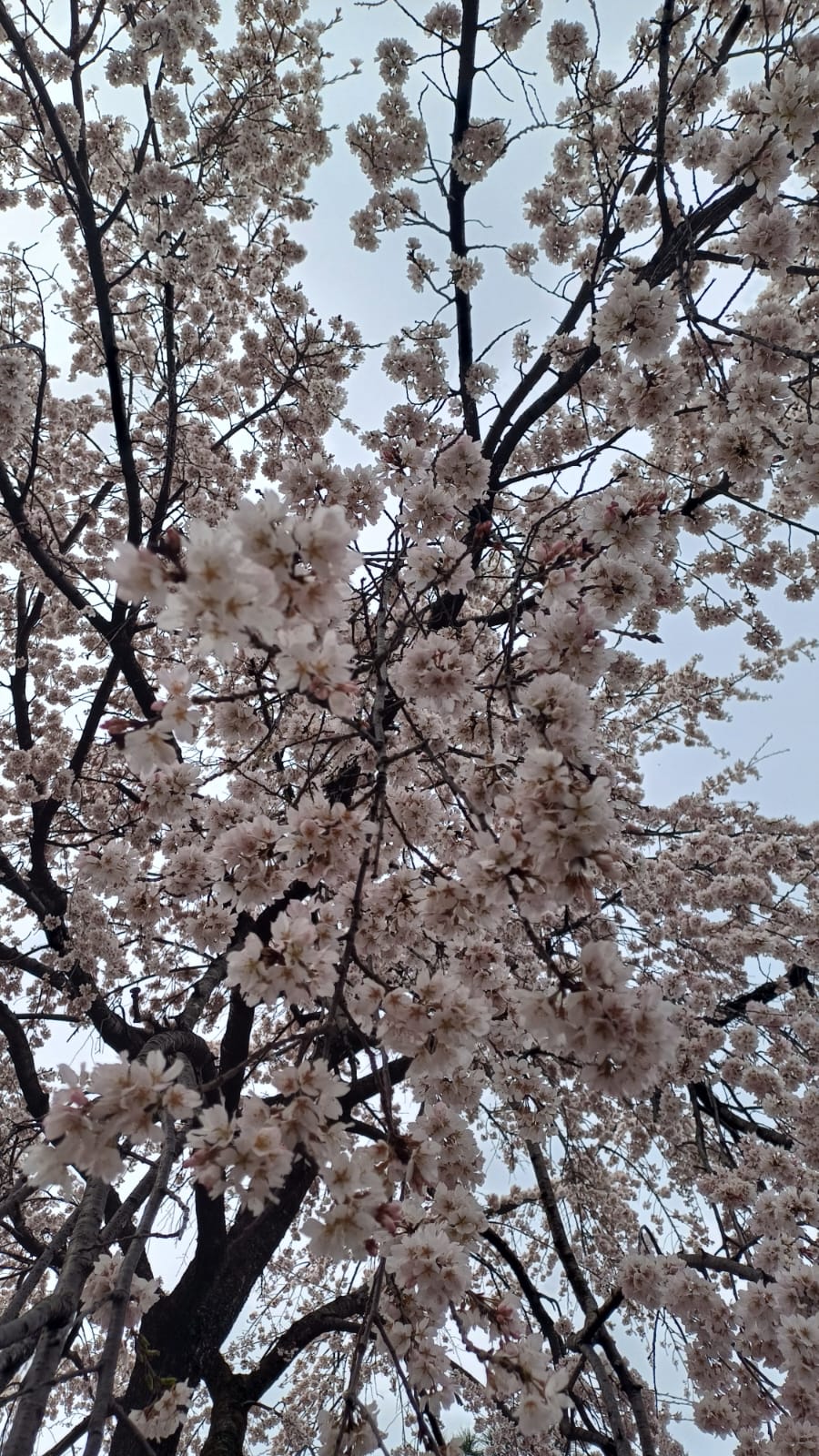
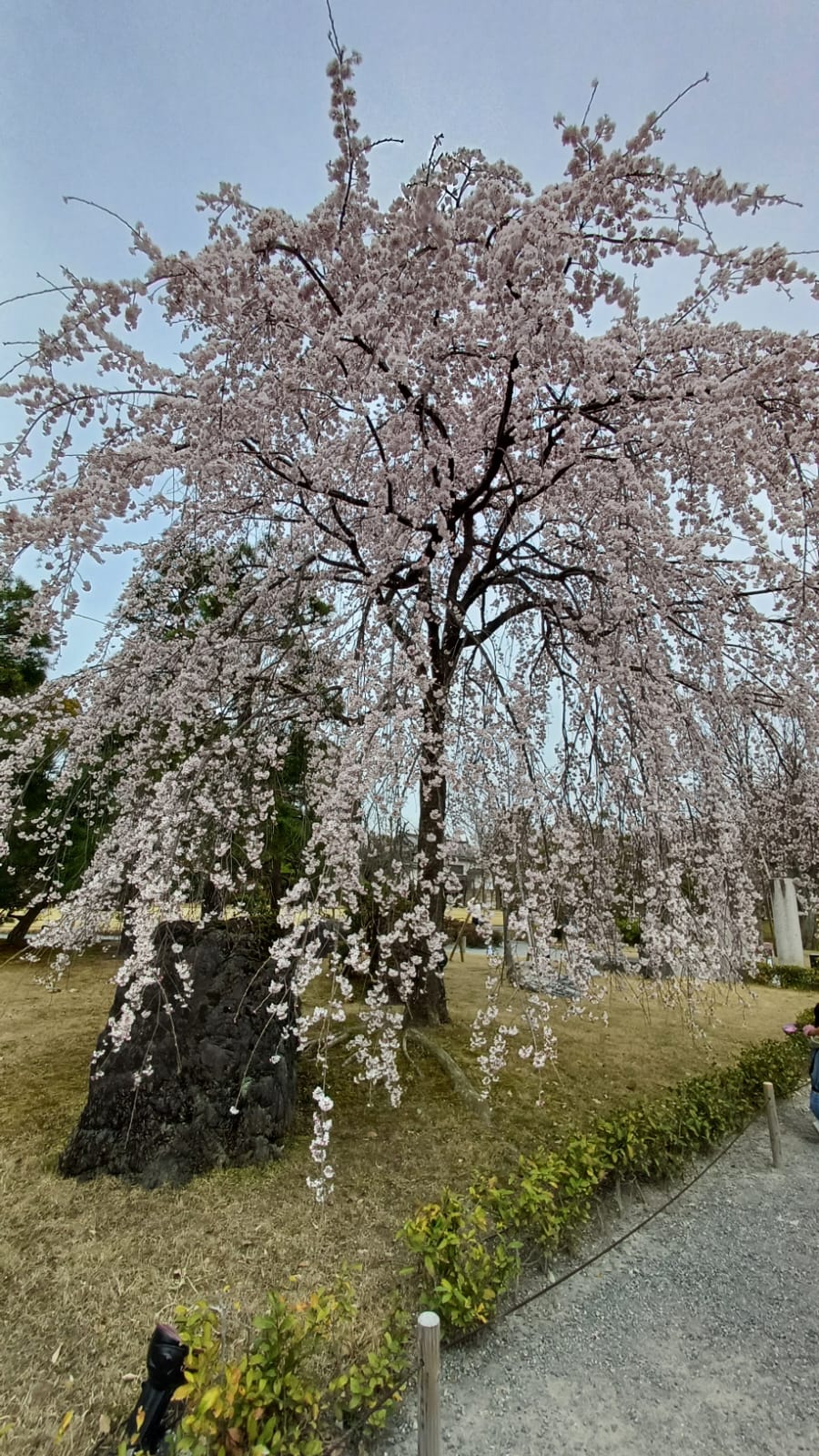
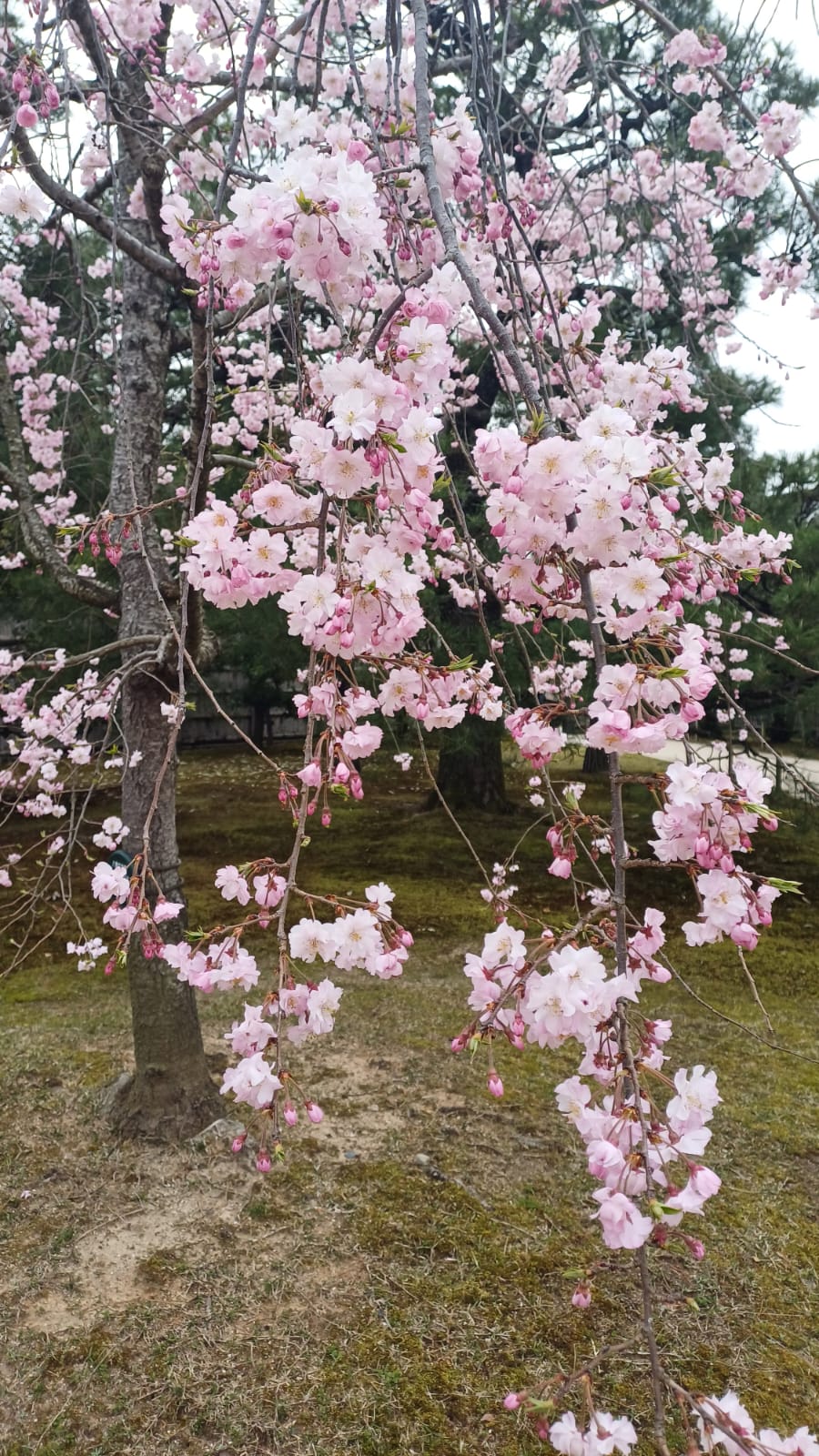
Now of course, whilst we were exploring, we were simultaneously keeping our eyes out for the cascade of cherry blossoms. To our delight, we managed to spot a few trees with blossoms just starting to bloom. It wasn’t the full cascade we had hoped for, but we took what we could get. It was strange, though – according to Google, this time of year should have been perfect for cherry blossoms. But of course, Mother Nature had other plans, teasing us with just a few trees in bloom. Still, the way the blossoms hung delicately from the branches in the garden was lovely. One could only imagine how breathtaking the entire garden would look once the full bloom set in.
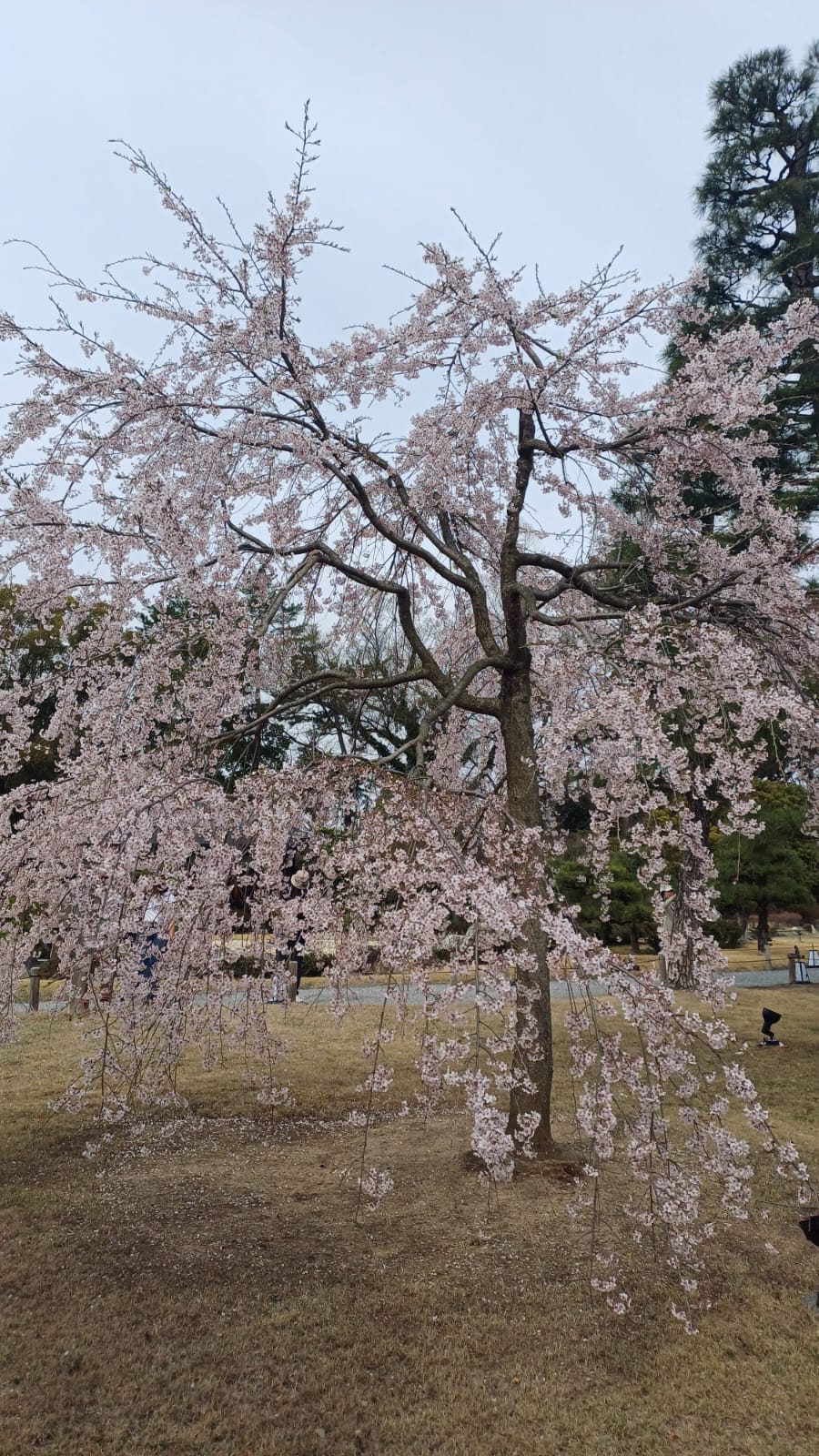
After feeling like we had explored some of Kyoto’s most iconic sites, we decided to take a break and do a bit of shopping!
Shopping
One thing I can promise you won’t regret is shopping!
From little trinkets and snacks to clothing and souvenirs, Japan has some of the most gorgeous items you can find. What I clearly forgot to mention earlier, during my time in Osaka (and beyond, of course), is just how much stuff I bought. From items at Don Quijote to perfumes, jewellery, and clothing – I have to admit, I’m not usually a shopaholic, but in Japan, I really had a problem! I will explain in future blogs about some of the items I bought towards the end of my adventures in Japan, but for now, I will leave it at that!
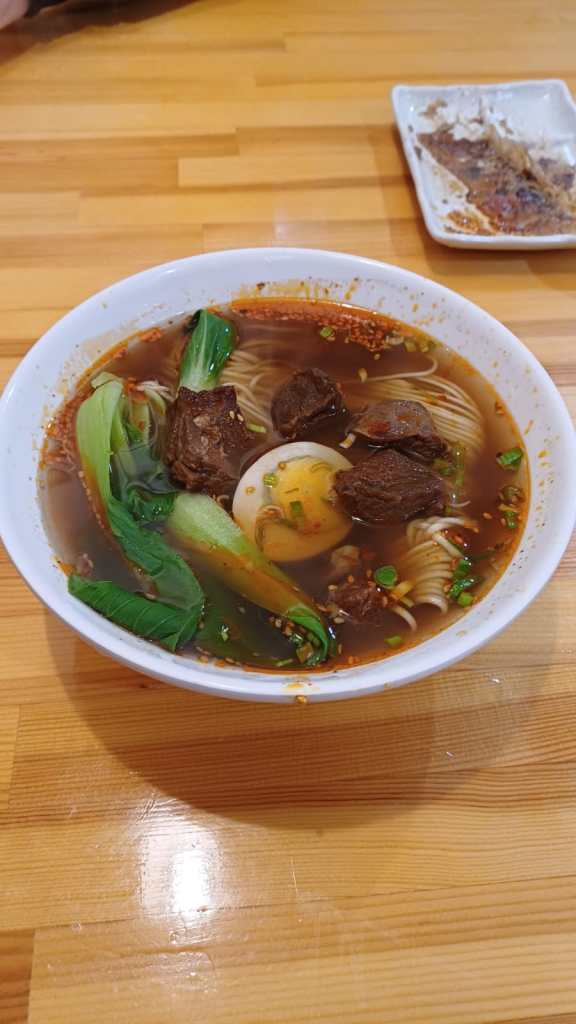
To make sure we didn’t blow all our money on the first day, we decided to take a break and grab some food. I ended up having a delicious ramen-style dish. Honestly, I wish I had taken more photos and made notes of my food, but it just didn’t occur to me at the time that I’d want to write about it in a blog!
I will try to do a better job in future adding the names and links to certain restaurants and places we ate at.
I guess one good thing about keeping certain experiences as a mystery, is so you the reader can do your own thing and be spontaneous! Whilst I fully encourage you to do research and plan to a degree, there’s no harm in spontaneity.
In my next blog post, I’ll share more about our adventures in Kyoto and wrap up with my final thoughts on the experience.
Thank you for reading my post—I hope you enjoyed.
Until my next blog of intrepid tales on my trails…!
 Intrepid Trails & Tales⛰️
Leave a comment